
- Published on
Implementing LemonSqueezy Payments for Crontap (for real) 💰
- Authors

- Name
- Dan Mindru
- https://x.com/d4m1n
I'm back at the @lmsqueezy 1-day 😂 integration. In my sleep, I saw that apihustle.com will become an international conglomerate with 10s of services in one subscription to rule them all 💍.
Sharing progress as I go
Since apihustle will become wildly successful, I should store the payment data in a separate database so I can share subscriptions between services.
So creating an new db in @supabase to handle that.
Here's how the infra looks
Crontap Internal API ↔️ Crontap Scheduler
↕️
Vercel Serverless ↔️ Auth ↔️ Crontap UI
Top part will be unchanged. Bottom part will change to have a webhook callback serverless function that stores data to supabase.
LemonSqueezy Subscription Change ➡️ Vercel Webhook Callback ➡️ Supabase
handle a request:
Crontap UI ➡️ Auth ➡️ Vercel Serverless ➡️ Check sub in Supabase
➡️ Crontap API or
❌ Deny request
Update
Integration with @supabase done. Now webhooks are all properly handled.
Just need to make a nice reusable check for subscribers.
Thinking:
select * from subscriptions
where user_id=uid
and status=active
and product_id=id
and variants_id in (x,y, z, ...)
Should be good?
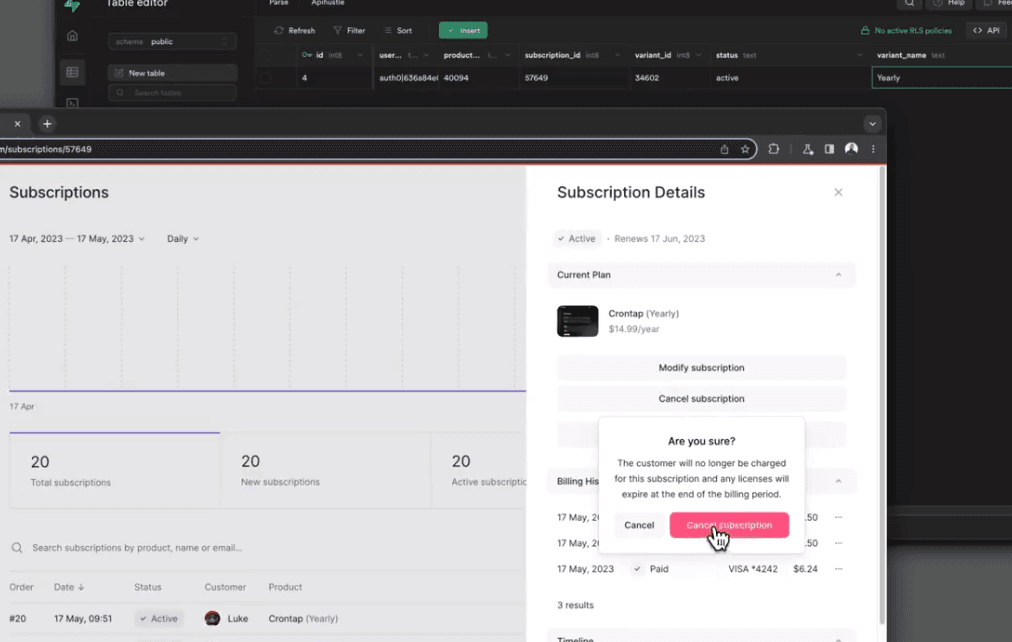
Query above seemed to work fine. Made a handy helper to check for subscriptions in any API call.
Gonna update the pricing page, test in prod & release tomorrow.
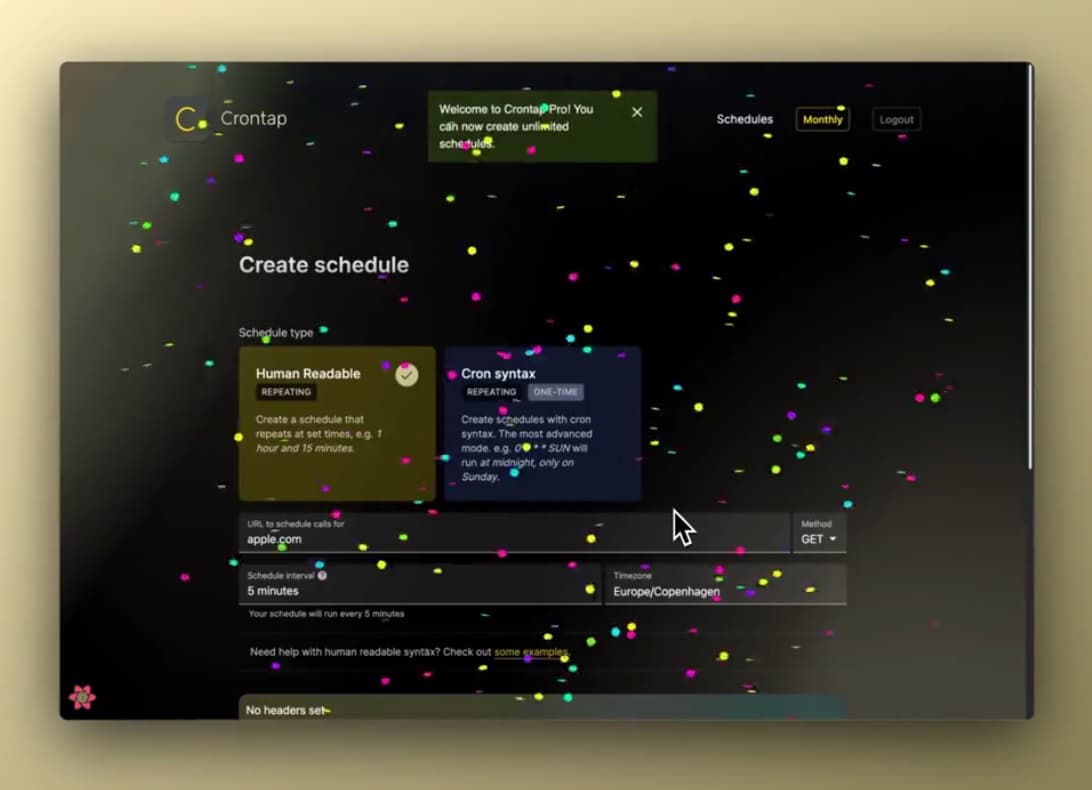
Now, let's talk about why did I fail in the first place
What did I want to do?
I wanted to rely on the LemonSqueezy API & do minimum effort to model & store data in my db.
I'd just store the order but wanted to rely on the LS API to get sub statuses & do checks for active subs directly instead of storing this in my own db.
On the flip side once I get the patterns in place it’ll be fairly easy to reproduce in other products UNLESS said products use a different kind of storage.
Still think some sort of “edge” payment integration could make sense. I know we’re relatively spoiled complexity-wise these days even though I’m b*thing about it but hear me out:
- You got your SDK: npm i for framework of choice
- You pass in a user ID & open a payment modal. Purchase complete.
- You got your backend SDK. Give it an api key and it can guard cloud functions like auth providers do (see auth0 etc)
- you have a backend SDK e.g. a withLemons wrapper that reads the user ID via a header. You get active subscriptions.
export withLemons((req, res) => {
    const { subscriptions } = useLemons()
     …
})
No subscription you get a 404 or whatever and the UI can handle that as it sees fit.
- no dealing with LS customer ids
- easy to switch env & test
- no webhooks needed ->
- no storage of payment data in consumer db needed
Sure that means all is delegated to LS and you have complete trust that they’ll have a good uptime and keep your data safe. You probably want to move away from that once you get bigger and ultimately switch to webhook + own DB, but I feel like now this is the only option you have if you don’t wanna resort to hacks.